


Where is European space science going?
The last few years have been an interesting time to sit in the meetings of the European Space Agency's (ESA) Science Programme. Several probes have been launched, new projects have been included in the programme, and several ambitious space projects are planned for the future. Of course, funding and overruns have always been a challenge, but now the turbulent world situation has brought with it a new kind of uncertainty.
In the following, I will tell you about the current situation and future prospects of the Science Programme.
Long-term plans and funding
At the meetings of the European Space Agency (ESA) Science Programme, we delegates are regularly presented with a view of how the available funding enables the development, construction, launch and operation of probes and space telescopes.
These Long-Term Implementation Plans (LTIPs) are coordinated with ESA's Council Meeting at Ministerial Level (CM). The most recent meeting, CM25, was held on 26-27 November 2025 in Bremen, Germany.
At ministerial meetings, member states decide how much they will commit to funding the various ESA programmes over the next few years. On the basis of these decisions, as well as the estimates of the future financial perspective, the Science Programme will update its long-term plan.
The outcome of the latest meeting was very good for the Science Programme: the member states agreed on EUR 3.787 billion in funding for the programme over the next five years. In addition, the budget will include an annual increase of 3.5 per cent in addition to inflation for 2026–2028.
The major goals of the Science Programme
The long-term action plans are linked to the broad strategies of the Science Programme, which guide its main scientific objectives. Cosmic Vision is ESA's current programme, which started in 2015 and will end in 2035. It studies the conditions for life, the functioning of the Solar System, the beginning of the Universe and basic physics.
Voyage 2050 is the next programme, which will pick up where the previous one ended. Preparations for it began years ago. Key targets include oceans of icy moons of gas planets, habitable exoplanets and gravitational waves from the early Universe.
Funding will determine the future
In a workshop held in connection with the Paris meeting last March, two alternative views based on the decisions of the CM25 meeting were presented.
A more hopeful scenario is based on the assumption that, in addition to inflation, the next ministerial-level meeting (CM28) will grant an annual increase of six per cent for 2029–2031 and that purchasing power will remain constant thereafter. In this case, the situation in 2035 would look like this: Cosmic Vision has been successfully completed and Voyage 2050 is about to start. LISA, which has just started operations, observes gravitational waves in the early Universe, and the X-ray telescope NewAthena will soon be ready to study the hottest objects in the Universe. The first flagship project of Voyage 2050, L4, which studies Saturn's moon Enceladus, is progressing towards launch in the early 2040s, according to plans. There are also several smaller probes and long-time veterans in the sky, such as the nearly 20-year-old Solar Orbiter. In addition, the funding has enabled the Science Programme to participate in projects led by other space agencies.

In the second scenario, which was referred to as the "desert effect", purchasing power will remain constant from 2029 onwards, and there will not be enough money to sustain the scientific ambition of the programme. NewAthena has been delayed, the launch to Enceladus is somewhere in the distant future, and several smaller-scale projects have been postponed or cancelled. Due to the savings, the operation of many functioning probes has not been continued, and cooperation with other space agencies has had to be significantly reduced.
Geopolitical uncertainty challenges the Science Programme
Recently, there has been a lot of discussion in the meetings and workshops of the Research Council on how best to be creative in the current challenging geopolitical situation and at the same time minimise its negative effects.
The situation of the US Space Agency NASA, which is constantly changing, is a cause for concern. NASA is a significant partner of ESA, including LISA and NewAthena for flagships. Although NASA has announced that it is still interested in both projects, its commitments cannot be trusted at the moment. In addition, a significant issue in the case of the Venus probe EnVision is the VenSAR radar promised by NASA. If NASA is unable to deliver the radar, ESA and its member states will have to find an alternative, which will cause significant additional costs.
There is also something positive to be found in the situation. Carole Mundell, Director of the Science Programme, has highlighted the possibility of strengthening Europe's technological expertise and independence and intensifying cooperation with other major space agencies.
Member states have also faced challenges in delivering the agreed instruments or their key components, and there have been problems with the availability of launches. The delays themselves cost money, as the maintenance of the project continues while the launch is postponed. These may result in tens of millions of euros in additional expenditure for the Science Programme every year.
Despite the increasing costs, ongoing projects are almost never interrupted, as years of work, funding and an extensive European research community have already committed to them. For this reason, the Science Programme is investing more and more in the planning phase of projects.
A new European space giant
One interesting change is related to the plan of three major European space companies, Airbus, Leonardo and Thales, to merge their space business into a new European space company. The project, codenamed Bromo, is scheduled to start in 2027. The aim is to pool resources and strengthen Europe's strategic position in space.
This merger may also have adverse effects on the Science Programme. For example, it may limit ESA's ability to compete for projects between several independent main supplier.

Diverse programme, big goals
One of the cornerstones of the Science Programme is its versatility. Missions of different sizes (Fast, Medium, Large, i.e., flagships) cover research in astrophysics, planetary research, solar and space physics, and fundamental physics. In uncertain times, the challenge is to ensure that not all resources are tied up in a few large projects.
The flagships will be used to study the biggest questions and develop the most challenging new technology. For example, the L4 mission to Enceladus will require batteries that operate in extremely cold conditions and possibly assemble a probe in orbit.
The flip side is the duration of the construction phase, which can stretch up to decades and budgets of billions of euros. The price of one flagship could be used to carry out several smaller projects that can be completed more quickly. They can also be used for groundbreaking science. A good example is the Fast-class Comet Interceptor, which intends to observe a comet arriving from the inner parts of the Solar System or even an interstellar visitor at close range.
Impact on Finnish space research
In my opinion, it is of paramount importance for Finland to guarantee a sufficient budget and thus maintain the diversity of the programme. In this way, we can find the projects that best suit our expertise and participate through suitable components, software development, data processing and modelling.
For example, Finland currently has one of the Euclid Space Telescope's data processing centres, and there are plans to offer a similar centre to the LISA Observatory. The X-ray and particle instrument SIXS, designed and manufactured in Finland, will travel to Mercury with BepiColombo, and we are involved in Comet Interceptor in the instrument, software development and science sectors.
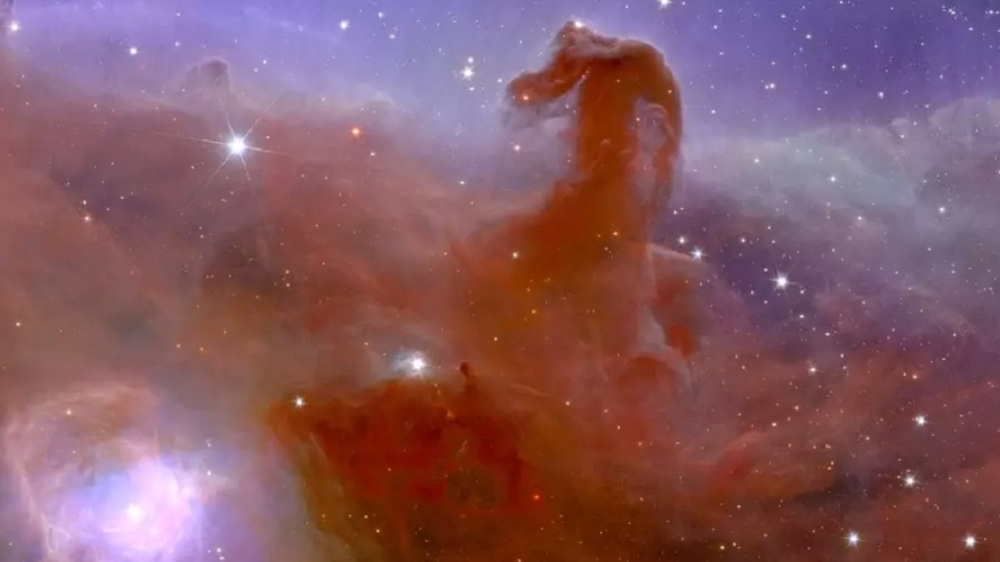
Finland is also involved in the Plasma Observatory project, both in terms of science and equipment. This swarm of satellites, consisting of seven identical probes studying near-space plasmas, is proposed as the next Medium-class project (M7) of the Science Programme. If the budget does not allow M7 to proceed as planned, it will also mean delays for Finnish researchers and equipment development.
Last year, ESA launched a mini-Fast call, in which the scientific community was asked to submit ideas for projects that could be implemented quickly and cost a maximum of approximately EUR 50 million. The aim was that the selected projects could be launched in less than five years. The call exceeded expectations, but unfortunately the programme has now been suspended for the time being due to budgetary reasons. It would be great to see applications from Finland for these fast-track calls in the future.
In general, we should take advantage of the opportunities to participate as widely as possible in the projects of the Science Programme. This will bring a lot of positive and multiplier effects as well as visibility to Finnish space science and technology. It will also enable the measurements to be made available immediately and utilised in scientific breakthroughs. At the same time, better opportunities for international cooperation and competition for European research funding will open up.
The Science Programme does not stop
Despite the challenges, the Science Programme is moving forward. In recent years, e.g. Euclid, JUICE and SMILE probes have been launched, and LISA, Envision and ARRAKHIS were adopted into the Science Programme. In November, BepiColombo will be placed into Mercury’s orbit, a new M-class project will be selected and Euclid's first extensive datasets will be published, including images of millions of galaxies. In 2027, PLATO will be launched to search for planets around stars similar to the Sun, and NewAthena is expected to be adopted into the Science Programme.

Even though things sometimes seem to stagnate, long time spans are frustrating, and large projects eat up a large part of the budget, it is great to see how the Science Programme aims to promote things from the bottom up and listen to the scientific community at all stages of space projects. This operating model also offers opportunities for Finnish space science and technology, and they should be utilised as well as possible.


