Space Economy: A strategic opportunity that opens only through comprehensive understanding
Developing the space economy requires clear strategic guidance, where funding, skills development, and administrative structures support business growth and international competitiveness. Mikko Punnala, a newly graduated Doctor of Philosophy (Space Economy), examines the development conditions of the Finnish space ecosystem in his column, drawing on a holistic perspective formed by his research and professional experience.
The information and positions presented in the column reflect the author’s own views, based on his doctoral dissertation and the associated research. The purpose of the publication is to highlight recent research findings and bring the opportunities and challenges of the space economy into public discussion.
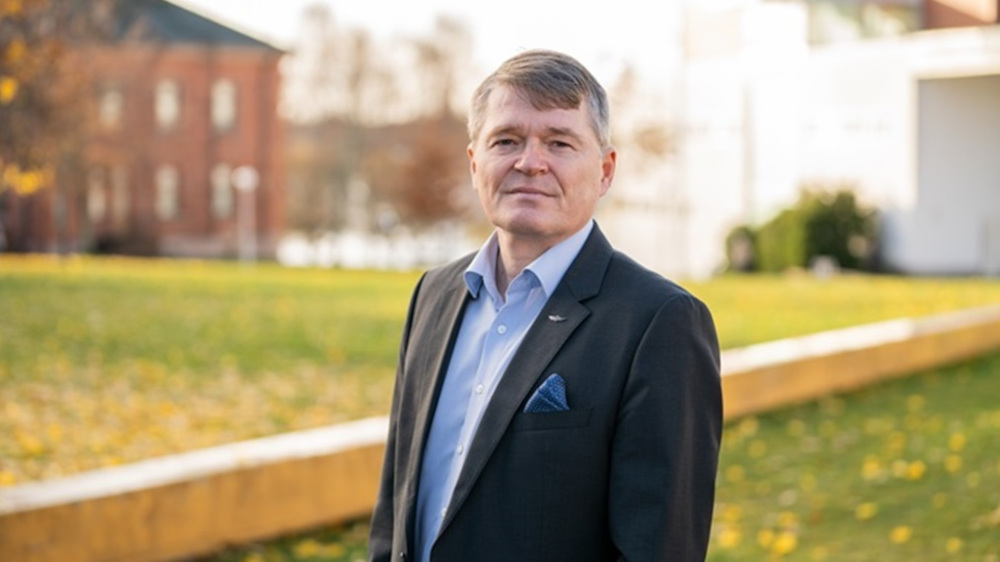
Mikko Punnala Mikko Punnala earned his Ph.D. in November 2025. His doctoral dissertation analyzes the institutional, economic, and geopolitical structures of the new space economy, as well as the internationalization of SMEs within this rapidly evolving sector. The full dissertation is available in the University of Vaasa’s publication series. A three-decade career in the Air Force and studies in strategy and security policy in Finland, Europe, and the United States strengthened his approach to viewing space systems as a whole, where operational, institutional, and geopolitical factors define the conditions for utilizing technology. Punnala’s research shows that space has become an integral part of society’s digital infrastructure, forming an interconnected ecosystem of technological, economic, and security dimensions. The key conclusion of the study is that developing the space economy requires clear strategic guidance, where funding, skills development, and administrative structures support business growth and international competitiveness. |
Sometimes research topics arise from strategic considerations, sometimes from long-standing hobbies and genuine curiosity. My own dissertation belongs to the latter category. Space initially interested me out of pure curiosity and technical fascination, but over the years, this interest deepened and merged with strong professional experience. Tasks related to monitoring space activities and technological development within the Finnish Defence Forces since 1995 provided a solid foundation for understanding the field. A licentiate thesis on satellite image interpretation, completed during the General Staff Officer Course in 2000, further deepened my expertise and reinforced my view of the future opportunities offered by space utilization.
Later, studies in strategy and security policy in Finland, Europe, and the United States, combined with working in a technologically advanced environment in the Air Force, broadened my perspective. Through these experiences, it became clear to me that space is not merely a scientific or military domain but a comprehensive system where economic, technological, and geopolitical dimensions are tightly intertwined. When this was combined with the research platform offered by the University of Vaasa and the opportunity to examine space through a shared framework of economy, technology, and geopolitics, the direction of the research began to take shape. The Digital Economy research platform at the University of Vaasa and the support of Professor Heidi Kuusniemi enabled an examination of the space economy as a broad societal and institutional entity rather than merely a technical phenomenon.
However, the dissertation did not emerge in isolation. During its preparation, Finland was updating her space strategy, the government program included space utilization, the security policy report recognized space as part of national security, and Business Finland and TESI directed investments toward space industry companies. Alongside all this, it became evident that while political and economic interest in space was growing, research and education still lacked an overarching strategic goal. The dissertation provides a systematic analysis of how to transition to the new space economy, what competencies it requires, and what kind of institutional and economic mechanisms are needed for Finland and other countries to fully leverage the opportunities offered by space.
Space economy services as a structural, yet often invisible, foundation of society
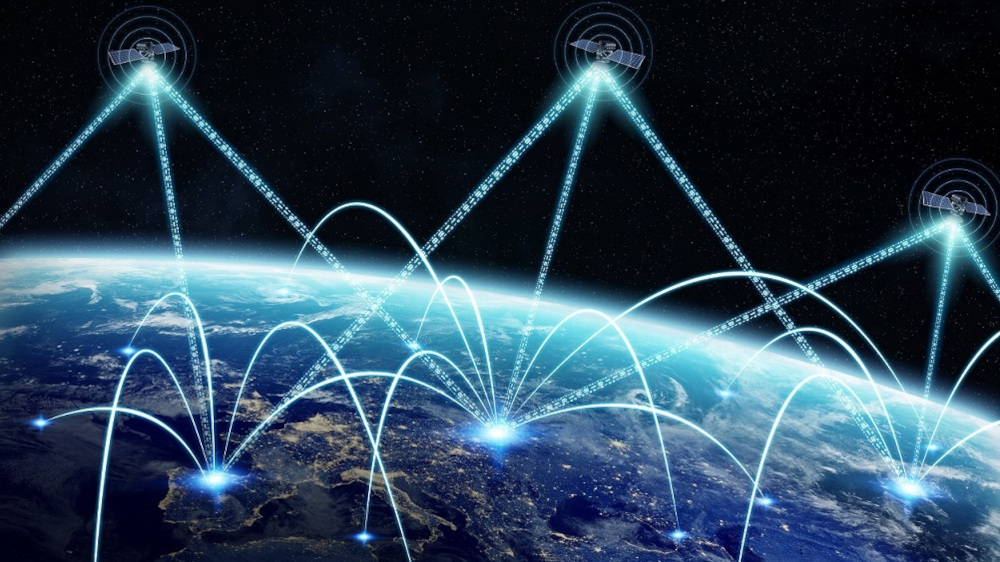
One of the key findings of my dissertation was that the space economy is not a separate part of the economy, but a rapidly growing and critical component of the broader system encompassing digitalization, technology, security, and geopolitics. Satellite navigation, remote sensing, and satellite-enabled telecommunications form a network that connects the financial sector, logistics, national defense, border control, energy, maritime operations, agriculture and forestry, environmental monitoring, and many other sectors of society. Space-based services are an essential part of societal functions, creating an invisible yet indispensable background ecosystem that is already integrated into our daily activities and national security of supply.
In Finland, there are still many companies that utilize services produced in the space environment but do not recognize themselves as part of the network that leverages space-based information. This is a significant problem: when an actor does not perceive itself as belonging to the space ecosystem, it cannot take advantage of available services, opportunities, funding channels, partnerships, or national and international programs. Alongside my dissertation, one conclusion was that companies often underestimate both their dependence on and the opportunities offered by space economy services. At the same time, they overlook a substantial growth potential that emerges when space-derived data is systematically integrated into business development.
The recent geopolitical and technological transformation has made this development even more visible. Competition between great powers and the declining costs of space technology have created an exceptional opportunity for Finnish SMEs to participate and succeed in the international space economy ecosystem. At the same time, technological advancements have lowered the entry barrier for new players. Examples include smaller satellites and more affordable launches. Agile startups have become a key part of the global space economy, and also smaller countries like Finland now have the chance to strengthen their technological autonomy and resilience by harnessing the potential enabled by space.

Investment and financial markets support this shift. Investors who previously avoided the defense sector are now directing capital toward dual-use technologies that serve both civilian and security needs. Space economy companies benefit from this trend because they provide cost-effective global coverage and lay the foundation for systems that meet future technological ecosystem requirements. This development is also evident in Finland. Technologies related to satellite imaging, positioning, and communication, as well as the utilization of observational data, are attracting increasing interest from investors and public actors. These solutions simultaneously support economic growth and critical societal functions while enabling the development of future technological ecosystems.
Space has assumed a new role at the core of digital infrastructure. It is no longer merely a stage for science and technology but a strategic resource directly linked to Europe’s technological competitiveness, security of supply, and strategic autonomy. Finland holds a strong position thanks to its high-level technological expertise, stable economic foundation, clear security policy direction, and societal stability. This enables us to leverage the space economy as a tool for both economic growth and strengthening national security.
However, it is essential to examine the space dimension comprehensively. It is not merely a technical, geopolitical, or security policy issue. The significance of space becomes clear only when viewed simultaneously through the lenses of economy, technology, and geopolitics. Combining these three elements is a prerequisite for Finland to fully exploit the economic, scientific, and strategic opportunities offered by space. In Finland, nearly all industries have the potential to benefit from space-enabled capabilities as part of business development. This requires, however, that space-related activities be considered as an integrated whole formed by economics, space technology, and geopolitics. It is important to understand both the opportunities and the risks and constraints of the operating environment—within the business sector as well as municipal and state administration.
The space economy has moved from the margins to the foundation of society. It is a new infrastructure that sustains the digital society, enables the flow of information, and secures critical functions while opening a window to harness the opportunities brought by new technologies. Understanding and utilizing the full potential is the next decisive step that will determine how significant a player Finland can become as an international economic actor and opportunity enabler in the space era.
The pieces of Finland’s space sector must be brought together
In recent years, Finland has taken significant steps toward a sustainable and growing space economy. Funding arrangements, the foundation of education, and the research knowledge base are in place, but they still fall under different administrative sectors without a clear overarching structure. Companies, research institutions, and government bodies operate strongly within their own domains. Despite several complementary strategies and objectives, the formation of a shared, active space ecosystem remains incomplete. Key areas of the space economy—such as financing, education, research, administration, industry, as well as defense, comprehensive security, and security of supply—continue to progress too much in isolation. The absence of a common strategic framework prevents the whole from becoming a coherent and purposeful entity.
Space activities in Finland have shifted from a marginal phenomenon to a significant part of the national economy. Value chains from space technology to satellite services and from data utilization to international cooperation form an entity whose exact size is difficult to measure, but growth also in Finland is evident. A multilateral business network, research and development environments, and international markets converge in a way that makes the sector not only technological but also strategic. Although absolute figures vary, the development trend is consistent: companies have exports, and new growth areas are opening up, particularly through data and services derived from satellites. The vision of the national space strategy aims to ensure that Finland can offer a globally competitive operating environment for the space sector in the future. The SPACECONOMY project, led by Professor Kuusniemi and funded by the Academy of Finland, supports this development by providing researched information on the structure, state, and future opportunities of the space economy, strengthening the basis for decision-making and helping to direct national investments effectively.

For this reason, it is justified to speak of the space economy as a significant sector for Finland’s economic development—not just as a technological niche, but as a growing, internationally oriented whole. National strategies and research programs confirm that the sector is not only about technology but also about fostering sustainable growth, driving digital transformation, and generating societal benefits. To maintain growth, Finnish companies must gain stronger access to international markets. Finnish satellite expertise is globally recognized, satellite data is utilized across all sectors of society, space technologies are needed for security and defense applications, and new communication solutions are opening global markets. Businesses and society must identify these market opportunities and support companies in leveraging them.
Finland has undeniable prerequisites for success in the space economy, but fully utilizing them requires connecting separate actions into a coherent whole. The next key step is to align funding, expertise, and administrative structures toward the same goal. This way, Finland can build a permanent and credible position as an international space sector player and ensure that the benefits derived from space are realized as broadly as possible.
Coordination of funding and partnerships
Finland’s funding system already offers diverse opportunities for space sector actors. Business Finland’s space programs, the ESA BIC Finland incubator, funding channels from EU space programs (such as Galileo, Copernicus, and EGNOS), and national innovation support form a broad toolkit that can cover a company’s development path from early stages to commercialization. The challenge is not a lack of funding but its fragmentation and the absence of national societal anchor customers. Often, information about different funding instruments does not reach all actors, and many companies utilizing space technology do not even perceive themselves as part of the space economy ecosystem or know how to leverage specific funding sources and opportunities.
Global and especially European developments have led to the establishment of national space agencies to develop space-related structures. A clear research-based conclusion is that Finland needs more centralized guidance to develop the space sector and harness its potential. A specialized “one-stop shop” for space funding and advisory services would create a structure that consolidates scattered funding channels, international opportunities, and domestic and foreign partnerships. A model can be drawn from Business Finland’s Defence and Resilience program, which brought security-related activities under a unified strategic framework and provided companies with a clear path to support and expertise. A similar principle would also serve the growth of the space ecosystem. This way, companies and research organizations could be systematically guided toward the European Space Agency, EU programs, national and international instruments, and strengthen understanding of the business opportunities offered by space so that funding tools consistently support Finland’s space policy objectives.
Business Finland’s New Space Economy program has already demonstrated how effective such a coordinated approach can be. The program was clearly ahead of its time and produced excellent results by strengthening expertise, supporting the creation of new companies, and building international connections that quickly elevated Finland’s position in the rapidly evolving space economy. The program’s conclusion did not halt the development path it initiated, but its full potential would have required more sustained continuation, which has not been achieved. The results were not anchored into permanent structures, nor did the initiatives receive the follow-up support needed for their expansion. Based on research, the view is that the program should have been expanded specifically to address early-stage companies’ funding gaps and enable scaling under domestic ownership so that the potential unlocked by the program could have been fully realized.
A centralized space funding model would also support the state’s defined investment policy. Business Finland and the state-owned investment company TESI have already invested in several Finnish companies utilizing space technology. Public capital is therefore available for sector development, provided companies know how to leverage these funding mechanisms. When funding is coordinated according to strategically set goals, it can be more effectively directed toward growth-oriented companies and demanding high-tech projects that move Finland toward the international forefront of the space economy.
Recent experiences show that public-private collaboration is key to scaling up space innovations. The partnership between the European Space Agency and Business Finland in the ESA BIC Finland incubator program has been a good example of this. Through collaboration, several successful space startups have emerged, supported by a combination of ESA and Business Finland funding and mentoring. A significant factor in companies’ success has been the formation of national and international networks to support their internationalization efforts. The continuation of ESA BIC Finland until 2030 and the launch of ESA Phi-Lab provide much-needed stability and long-term perspective, encouraging the planning of more substantial investments and development projects.
Existing resources must also be better utilized. Satellite data from ESA’s Copernicus program is already freely available to Finnish companies and research institutions, but its use remains limited. More guidance and training are needed for the commercial exploitation of data. Similarly, the opportunities offered by EU space programs must be fully utilized. The Galileo, EGNOS, and Copernicus programs offer not only funding but also pathways to European procurement chains and joint projects. Finland must ensure that companies systematically participate in EU space program tenders and development projects. This way, we are not only technology developers but also commercializers of products and services and exporters.
Another key development direction is strengthening public-private partnerships. Scaling innovations based on space technology often requires the public sector to participate as a financier, first customer, or enabler of the operating environment. The government would have a justified role in piloting and testing domestic space services. Acting as a reference customer, it can provide companies with a springboard to international markets. In the defense and security sector, the importance of space technology is growing rapidly, and public-private collaboration models offer a pathway to launching joint development projects. Companies and authorities can jointly build critical, resilient satellite navigation services for security and supply chain resilience, which are simultaneously operational and strategic needs. Municipalities and cities also have concrete needs in land-use monitoring and assessing the impacts of climate change. Projects can be directed to domestic actors through procurement and pilots, creating demand that supports the broader adoption of space-based solutions.
The public sector can also act as a risk-sharer when new technology involves uncertainties. The state can provide grants, guarantees, or co-financing for initial space projects to help promising solutions take off. The result is mutual benefit: the public sector gains better services and strengthens its strategic readiness, while companies gain additional resources and domestic references to grow globally.
Education and research: The foundation of space expertise
Education and research form the most sustainable foundation of Finland’s space sector. Without a systematically built talent base, no technological or economic development can remain stable. During my doctoral dissertation, it became clear that the growth of space companies and markets has been significantly faster than the development of academic education and research. Companies have successfully seized new business opportunities and found their place in international value chains, but the education system has not yet created a clear and consistent pathway to systematically produce space professionals at all levels of education. This imbalance is critical for Finland: without a talent base rooted in education and research, the growth of the space sector will inevitably remain narrow. It will be exposed to skill shortages, fragmented projects, and dependence on foreign expertise.
Finland has an exceptionally strong foundation for developing space expertise, with knowledge accumulating from several complementary research and educational environments. Aalto University’s student satellites have demonstrated that domestic technology development can produce satellites meeting international standards, and commercial satellite imaging has become a globally recognized area with ICEYE. The long-term work of the Finnish Meteorological Institute and the University of Helsinki in space physics and space weather research provides a strong scientific basis, complemented by the University of Vaasa’s analyses of economic, institutional, and geopolitical frameworks.
This ecosystem is further strengthened by technology-focused research at the Universities of Tampere and Oulu. Tampere develops satellite and positioning technologies covering secure GNSS systems, interference and spoofing detection, receiver technology, embedded systems, and advanced signal processing methods. This research forms a coherent technological continuum from satellite signal reception to its application in critical systems such as autonomous transport, drone systems, and infrastructure monitoring. The University of Oulu’s investments in wireless communications and future 6G systems support this whole, as satellite positioning, data transmission, and network synchronization increasingly rely on the integration of satellite and terrestrial systems. VTT and other research institutes complement the chain by developing space components, materials, and system architectures. Finland thus possesses expertise across the entire space technology value chain—from basic research to applied technology and data-driven commercial services.
The main challenge is not the level of expertise but its fragmentation. While individual actors produce high-quality research and train specialists, the whole does not yet form a unified national strategy. For the future of the space economy, the decisive question is whether Finland can integrate these separate areas of expertise into a coherent development path that supports a long-term and competitive space ecosystem.

To improve the situation, Finland needs a national education and research strategy for the space sector. It should bring together different educational levels, disciplines, and regional competence clusters. The goal would be to ensure that space-related teaching and training are available at all levels—from vocational secondary education to university postgraduate degrees. In practice, this means incorporating space topics into curricula, career paths, and research programs throughout the education system. Such a strategy would create a continuous educational pathway where secondary education provides technical foundations and operational skills—for example, satellite testing, equipment management, or ground station maintenance—while higher education delivers deeper expertise needed for research and innovation. Universities could offer space technology minors and launch new space-related master’s programs, such as an MBA in space business or a data analytics program focused on satellite data. At the top of the career ladder, there could even be a national doctoral program in space studies to attract talented researchers to specialize in the field.
Multidisciplinarity is key here. The space sector does not only need engineers and natural scientists but also lawyers, economists, security policy experts, cybersecurity specialists, environmental researchers, and business developers. Integrating these fields into space education would make Finland a pioneer in growing multidisciplinary space expertise. Finland is known for high-quality education, but this reputation has not yet been directed toward the space sector. By positioning itself as a developer of space professionals, Finland could attract international students, researchers, and even companies. When foreign experts’ education and career paths continue in Finland after graduation, it strengthens both our talent base and international visibility.
At the same time, we can present ourselves to the world as a “small but agile” country that seamlessly combines research, education, and business. Globally recognized space clusters—such as the Toulouse region in France, Bangalore’s tech hub in India, and Silicon Valley in the United States—have emerged precisely through close collaboration between universities, research institutes, and companies. A similar model can be developed in Finland in centers like Tampere, Espoo, Vaasa, and Oulu, where research and industry already intersect.
Strengthening investments in education and research also requires structural reforms. One idea is a national “Space Campus” network that would combine the specialized expertise of universities and research institutes and offer education, research collaboration, and innovation activities under one roof. This network could work closely with regional development agencies and companies, forming the backbone of a Finnish space cluster where science, education, and business meet. Modern learning environments and experimental learning models would support space education. For example, in living lab concepts, students, researchers, and companies can work together on real projects, which makes space a concrete part of teaching at an early stage. Such practical engagement inspires young people to pursue natural science and technology and grows the future talent pool.
Inspiring interest in space must start in primary school. The groundwork has been laid by initiatives such as the ESERO training program and the science center Heureka, but advancing space expertise requires a national umbrella program. Now is the right time to draft a development plan for space competence that covers the entire education system—not only degree programs but also lifelong learning and the development of research infrastructures. This would support Finland’s space strategy while strengthening economic growth and security policy objectives more broadly.
Alongside the education strategy, the acute shortage of skilled professionals must also be solved. More domestic experts need to be trained, but at the same time, foreign talent should be attracted to complement the workforce. Finland must make itself an appealing destination for top space professionals by offering clear career opportunities. Companies should also collaborate on recruitment and training. If ready-made space experts are not available in sufficient numbers, they can be trained from other technical fields. For example, experienced electronics or software professionals can be introduced to space projects through relatively short supplementary training. Such measures will help ensure that the talent base grows in step with the expansion of the space sector.
Towards comprehensive space governance
The coordination of space activities requires a clearer structural solution. At present, Finland lacks a permanent national body that would take overall responsibility for developing the space sector. The Finnish Space Committee and The Space Business Forum has already served as useful platforms for discussion and networking among companies, researchers, and authorities, but that role has been limited to promoting cooperation rather than strategic guidance. Space activities are linked not only to business but also to geopolitical, technological, and security policy issues. Therefore, Finland should have a national body that brings together companies, research, education, and administration, and is capable of creating a shared situational picture and strategic guidelines.
International comparisons show that many countries of Finland’s size have solved this by establishing their own space agency. The idea of creating a national space agency has been under consideration in Finland for a long time. If Finland had established centralized space governance back in 2020, when the idea was first raised, we would now be at the forefront of European space administration. The delay has not eliminated the need—quite the opposite. The sooner own national space authority is established, the sooner scattered expertise can be gathered, funding directed more efficiently, Finland’s international position strengthened, and ensured that the benefits of space activities flow for the benefit of Finns.
I have consciously avoided employing the term space agency, as the actors involved in space activities form a largely unseen network that extends across the entire societal structure. Within Finland’s administrative system, an agency-level organisation may not have the breadth required to respond to the wide-ranging needs of government or to fulfil the international responsibilities associated with modern space activity. From the perspective of an individual researcher, the most appropriate institutional location could be within the Prime Minister’s Office, which would constitute a new and significant administrative development in the national governance framework.
A proposal of this nature inevitably invites both interest and differing opinions, and any eventual decision would require a comprehensive and impartial examination. The essential question is whether we are prepared to meet this challenge and to take the necessary developmental steps in a forward-looking manner that makes full use of the opportunities available, or whether adaptation will occur only when future demands leave no alternative.
The defense administration’s special role must also be considered. The Finnish Defence Forces have already assigned the Commander of the Air Force the duties of Space Forces Commander and are planning a space operations center, highlighting the strategic importance of space for national defense. The defense sector also has established international partnerships, particularly within NATO. These military connections should not be subordinated to civilian space governance; instead, the new national space authority should operate alongside the Defence Forces. It is essential to maintain information exchange and a shared situational picture between civilian and defense sectors so that all actors benefit from each other’s observations and capabilities.

Modern and enabling legislation is also needed. Finland’s first Space Law came into force in 2018. It was an important start, but now it is time to assess whether current regulations keep pace with the sector’s rapid development. The goal should be a clear regulatory framework compatible with international agreements—predictable for businesses and not an obstacle to innovation. In these respects as well, a centralised space governance model would help ensure that Finland’s national objectives are achieved and that its international obligations are fulfilled. Space legislation should also be updated to address new phenomena such as satellite constellations, space debris management, or commercial Moon and Mars projects. Safety and responsibility must be maintained in the development of legislation, but at the same time a framework must be created that attracts space investments to Finland. For instance, customs relief could be considered for components related to satellite launches, and research and development in the space sector could be supported with special tax incentives.
A favorable operating environment is also crucial from an investment perspective. International venture capitalists carefully assess the legal environment of the target country. If rules and licensing practices are unclear or slow, investments easily go elsewhere. Finland’s advantage lies in its small and agile administration and fast decision-making capability. This advantage should be leveraged by ensuring that regulations can respond quickly and flexibly to new needs.
When funding, expertise, and governance are interconnected, a system emerges where innovation and investment reinforce each other. A shared educational pathway, multidisciplinary research, centralized funding advisory services, and a national space authority form the foundation on which Finland’s space economy can be built sustainably and competitively on a global scale. All this requires long-term policies that view space as an integral part of Finland’s economic and strategic future. Space should not be seen as a separate experimental sector but as a core societal infrastructure.
Finland has all the prerequisites to be a player larger than its size in the new space era. We have expertise, a stable society, and a track record of rapid development. What is needed now is consistency, a shared strategic direction, and a bold decision to harness existing potential.
Finally: Towards a new space era
Finland now stands on the threshold of a new space era. Geopolitical and technological changes have opened a window to a vast universe of opportunities. How we seize this moment depends on us. We need a clear strategic vision and the courage to act. We have already shown that we are capable of rapid growth and innovation when the pieces fall into place. Next, we must ensure that those pieces stay together, so that Finland builds a unified space ecosystem where education, research, business, and public support reinforce each other.
When I look at my own path from hobbyist to doctoral researcher, I see a reflection of Finland’s space story. At the beginning, passion and curiosity were the fuel. Likewise, at the national level, without passionate actors, nothing new emerges. Then came the need for systematic learning and networking. Similarly, Finland has had to learn the rules of space activities and forge international partnerships. Finally, perseverance and environmental support were required for the research to be completed. In the same way, Finland’s space sector needs long-term support and cooperation to reach its full potential.
Our opportunities are not limited to economic figures or technological achievements. It is also about Finland’s contribution to solving global challenges. With satellites, we can monitor climate change; with space technologies, we can promote sustainable development and security, and generate new knowledge about the universe. The space economy is our next big step in advancing technological well-being. This step must be taken thoughtfully but decisively. As noted, the momentum is now, and if we do not seize it, others will. We have all the prerequisites for success, as long as we dare to set our sights on the stars while keeping our feet firmly on Finnish soil.
Finland is a small country, but our ambitions can be great. We have the opportunity to be agile, proactive, and an independent trailblazer in the emerging international space economy. It is time to write the next chapter in Finland’s innovation history. This time, the story reaches all the way to space. When we combine our strengths, knowledge, and passion, even the sky is not the limit.
Translation of the original column